The global social media ecosystem is undergoing its most radical structural transformation since the dawn of Web 2.0. For nearly two decades, the centralized infrastructure of major tech conglomerates has dominated digital human interaction. Users have historically traded their private data, creative intellectual property, and digital autonomy in exchange for access to communication networks. However, mid-2026 has marked a critical breaking point.
Driven by rising algorithmic censorship, systematic data vulnerabilities, and unfair monetization models, a massive migration is underway. Audiences, independent journalists, and global creators are leaving walled gardens in favor of Decentralized Social Media (DeSoc) networks. Powered by Web3 protocols, decentralized ledgers, and secure identity frameworks, DeSoc is shifting control from corporate boardrooms directly into the hands of the community.
For media professionals, global tech investors, and everyday internet users, understanding this paradigm shift is essential to navigating the next iteration of the global digital economy.
1. What is DeSoc? The Architecture of Decentralized Social Networks
To understand why decentralized media platforms are scaling rapidly, we must analyze how their underlying architecture fundamentally differs from traditional networks.
Centralized platforms rely on proprietary databases. Every post you share, every direct message you send, and every interaction you make is stored on isolated corporate servers. If a platform modifies its algorithmic parameters or revokes your profile privileges, your entire digital footprint and audience connection vanish overnight.
DeSoc platforms operate on top of open-source, public protocols and blockchain layers. Instead of your profile being tied to a specific company, your digital identity is encapsulated as an independent cryptographic asset.
Key Pillars of the DeSoc Infrastructure:
User-Owned Graph Data: Your follower networks and connections are portable. If you move from one decentralized application to another, your audience moves with you seamlessly.
Open Algorithmic Curation: Instead of black-box algorithms designed to maximize outrage and watch time for ad revenue, users can choose or design their own content filtering parameters.
Native Protocol Monetization: Financial transaction layers are baked directly into the network architecture, enabling micro-tipping, digital asset gating, and peer-to-peer subscriptions without predatory middleman fees.
2. Breaking Down the Leading DeSoc Protocols and Ecosystems
The current decentralized media landscape is not dominated by a single monopoly but is instead growing through interconnected protocols. Let’s evaluate the major networks driving millions of new sign-ups this year.
Farcaster and the Hub Architecture
Farcaster has emerged as a powerhouse for developers, tech journalists, and entrepreneurs. Operating as a sufficiently decentralized protocol, it utilizes off-chain hubs to handle real-time social data while maintaining identity security on-chain. The integration of “Frames”—features that turn standard social media posts into interactive mini-applications—allows users to mint digital collectibles, cast financial votes, or buy products directly inside their social feed.
Lens Protocol and the Composability Framework
Lens Protocol approaches social media through the lens of modularity and composability. Built on scalable blockchain infrastructure, every profile on Lens is structured as a unique digital asset. This ensures that any interaction, publication, or follow history is permanently owned by the creator, allowing developers to build hundreds of diverse user interfaces on top of the same shared database layer.
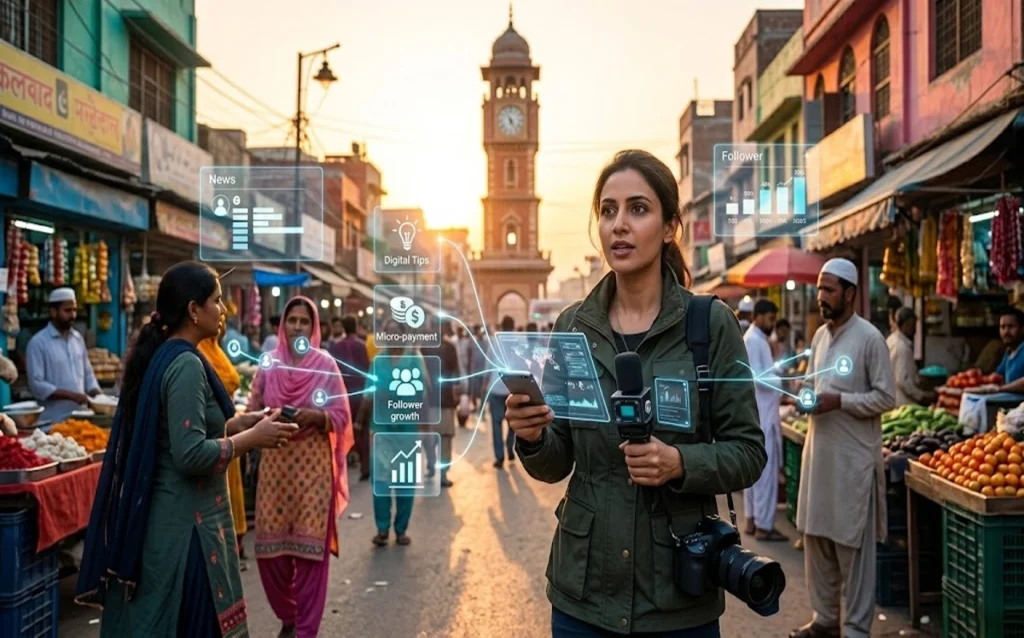
As these global decentralized protocols dismantle international borders, the demand for localized content hub delivery has skyrocketed. Leading regional digital news portals, such as Karachi Updates 24, demonstrate how quick real-time reporting models are shifting toward independent cloud infrastructure to deliver Urdu news directly to local audiences. As decentralized publishing nodes become mainstream, local networks will be able to distribute uncensored regional updates worldwide instantly.
3. Comprehensive Comparison: Traditional Social Media vs. Web3 DeSoc
To fully understand the economic and technical advantages of this structural migration, we must contrast Web 2.0 paradigms with Web3 DeSoc networks:
Operational Metric
Traditional Networks (Web 2.0)
Decentralized Social Media (Web3 DeSoc)
Data Ownership
Owned entirely by the corporation.
Owned entirely by the user via cryptographic keys.
Audience Portability
Lock-in effect; cannot transfer followers to other apps.
100% portable; follower graphs travel across different front-ends.
High vulnerability to profile cloning, identity theft, and data breaches.
Secured by decentralized identifiers (DIDs) and zero-knowledge proofs.
Developer Access
Restricted APIs; platforms can shut down third-party apps arbitrarily.
Open-source infrastructure; permissionless building on shared social graphs.
4. The Economic Catalyst: Creator Monetization Redefined
The economic model of traditional social media is structurally flawed for creators. Platforms pocket up to 45% to 50% of advertising revenues while maintaining complete control over payout terms. In the decentralized ecosystem, monetization is frictionless, immediate, and direct.
[ Centralized Model ] ➔ Creator ──(45% Corporate Tax)──> Audience
[ Web3 DeSoc Model ]  ➔ Creator <──(Direct Micro-Tips)──> Audience
Social Tokenization and Digital Collectibles
On DeSoc platforms, creators can launch customized social tokens or wrap high-value publications as digital assets. Super-fans purchase these assets to gain exclusive entry to community spaces, early content releases, or direct advisory voting rights on future creative projects. This establishes a true alignment of incentives between a publisher and their community.
Micro-Tipping and Smart Contract Payouts
Because Web3 social graphs are natively connected to global financial networks, cross-border payments occur instantly in micro-cents. A reader in Tokyo can tip a journalist in London a fraction of a dollar for an insightful thread, completely bypassing high credit card processing fees and international banking delays.
This decentralized monetization shift is particularly promising for digital journalists operating in fast-paced urban markets. Major city news agencies, like Karachi Updates 24, rely heavily on consistent audience traffic to support continuous local crime reports, weather alerts, and political updates. Integrating direct peer-to-peer micro-transactions allows independent journalism channels to thrive without depending entirely on corporate ad partnerships.
5. Security and Privacy: The Rise of Zero-Knowledge Social Proofs
As identity theft, synthetic media generation, and profile cloning reach unprecedented heights online, maintaining trust within digital networks has become a primary challenge. DeSoc addresses this issue through Decentralized Identifiers (DIDs) and Zero-Knowledge (ZK) cryptography.
Eliminating the Bot Problem
By linking digital profiles to verifiable cryptographic credentials, DeSoc platforms can seamlessly distinguish between authentic human creators and automated bot armies without requiring users to sacrifice their personal identification documents. This establishes a transparent network environment where information authenticity can be easily verified.
Privacy-Preserving Verification
Through Zero-Knowledge technology, a user can prove they meet specific network criteria—such as being over a certain age, possessing a minimum financial asset balance, or residing in a specific geographic region—without ever revealing their name, exact address, or private documents to the underlying application.
6. How Businesses and Brands Can Capitalize on the DeSoc Shift
Corporate marketing departments and global brands are quickly discovering that traditional advertising strategies are yielding lower returns due to ad-blockers and privacy tracking limitations. Forward-thinking enterprises are shifting their attention toward decentralized social graphs.
Data Analytics with High Accuracy
In the Web 2.0 framework, brands buy inferred, third-party user tracking data that is often inaccurate. On decentralized networks, because user graphs and interactions are stored on open ledgers, brands can analyze transparent on-chain activity. This allows businesses to target their ideal demographics with high precision based on real-time consumer interactions, all while respecting user privacy protocols.
High-velocity media models are perfect indicators of how real-time traffic shifting works in practice. Online publishing platforms, including specialized news sites like Karachi Updates 24, capture vast demographic data points through day-to-day audience interaction. In a decentralized setup, these audience metrics can be securely translated into highly accurate on-chain analytics, giving brand sponsors unprecedented clarity regarding visual engagement and advertisement metrics.
7. Overcoming the Challenges of the Decentralized Frontier
Despite the impressive technological momentum, the transition toward widespread DeSoc adoption faces several structural challenges that developers are actively working to resolve.
Technical Complexity and User Onboarding
For the average internet user, managing cryptographic private keys, paying network transaction fees, and setting up digital wallets presents a steep learning curve. To achieve true mass-market adoption, DeSoc applications must abstract these complexities behind smooth, familiar user interfaces, allowing users to sign up via standard email parameters while seamlessly generating secure Web3 layers in the background.
Scalability and Data Storage Limitations
Storing massive multimedia elements—such as high-definition videos, audio files, and high-resolution images—directly on a primary blockchain layer is incredibly expensive and slow. The DeSoc ecosystem relies heavily on specialized decentralized storage layers like IPFS, Arweave, and advanced Layer-2 scaling frameworks to process millions of fast social interactions concurrently.
8. Historical Milestone Matrix: DeSoc Evolution Over Time
To appreciate how fast this ecosystem is developing, let’s examine the key developmental milestones that have shaped the decentralized social landscape:
Year Range
Primary Technological Milestone
Ecosystem Characteristics
2018 – 2021
Conceptual Phase & Early Infrastructure
Introduction of decentralized file storage; initial theoretical frameworks for open social graphs; high technical barriers to entry.
2022 – 2024
Protocol Layer Foundations
Deployment of Lens Protocol and Farcaster; emergence of basic tokenized creator monetization; early developer adoption.
2025 – Early 2026
Application Scale & Interface Layering
Seamless user onboarding experiences; widespread implementation of ZK-proofs for privacy; massive migration of web communities.
Conclusion: The Sovereign Digital Future Awaits
The rise of Decentralized Social Media represents far more than a temporary trend in software design; it is a permanent course correction for the internet itself. By decoupling our digital identities and relationship data from the control of centralized monopolies, DeSoc is restoring the web to its original purpose—an open, permissionless network built for free human expression and fair economic distribution.
As the underlying technical barriers to entry dissolve, the economic leverage will tilt irreversibly toward creators, independent journalists, and communities who own their digital real estate. The age of corporate data extraction is drawing to a close. The future of online connection belongs to the sovereign digital citizen.








Leave a Reply